
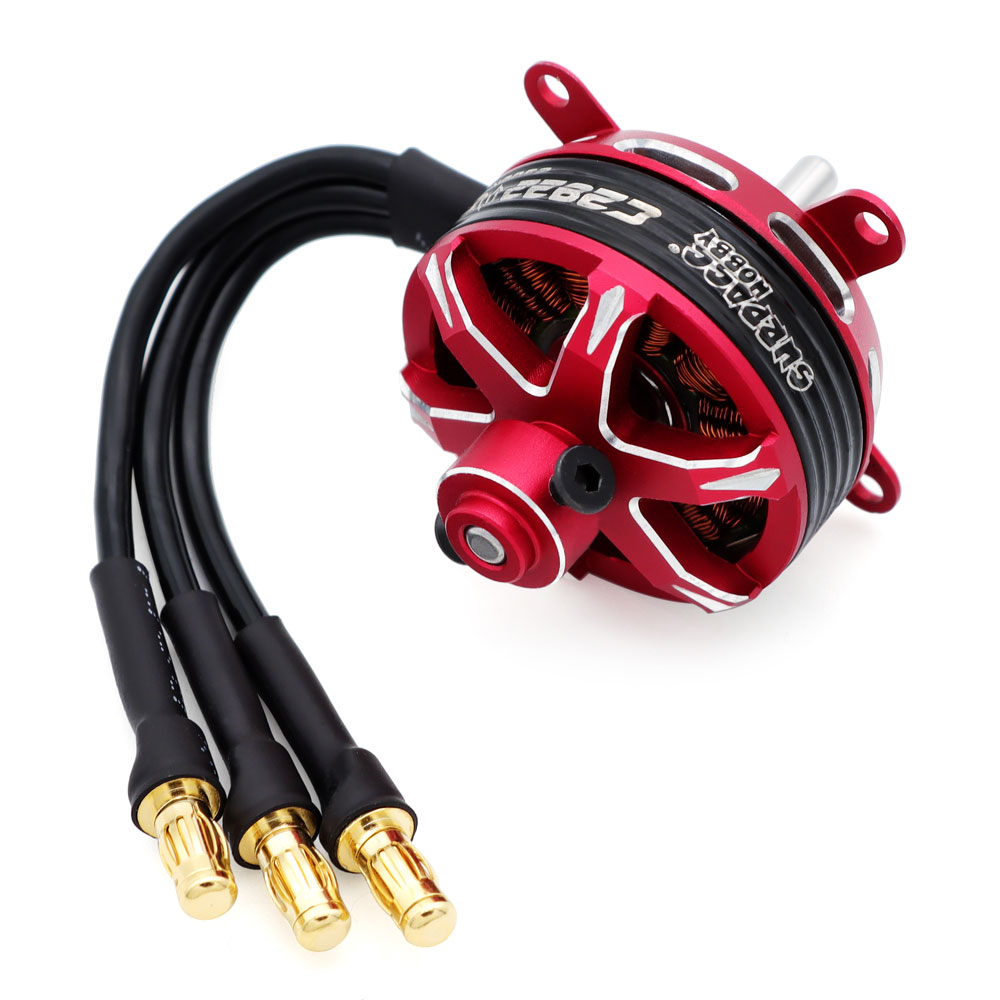
The goal is to take rotational motion from the electric motor (in this case Brushless outrunner DC motor C2822-V2) and convert it into linear motion. The chosen motor should have high torque output. The C2822-V2 not only has high torque output, but also a squashed form and convenient mounting bracket. I will take advantage of these proportions when designing my gearbox.

I made a 3D model of a motor from Surpass Hobby. I worked from the diagrams on the store page to get the model sized correctly.

KHK Gears has a selection of stock gears. The ones I am interested in are the gears made of polyacetal with a locking steel core. These will be heavier but much stronger, capable of transmitting more torque to the axles.
An electric motor drive shaft is 3mm in diameter. So I need a gear with 3mm bore diameter. There is one on KHK Gears that has 15 teeth. For the other axles I can make them a bit bigger. I will have two gears on one axle. Part of the problem is finding a bore diameter (axle) that fits both very large and very small gears. There is a 24 tooth gear and an 80 tooth gear on a 5mm diameter axle, together making a mechanical advantage of 80/24.
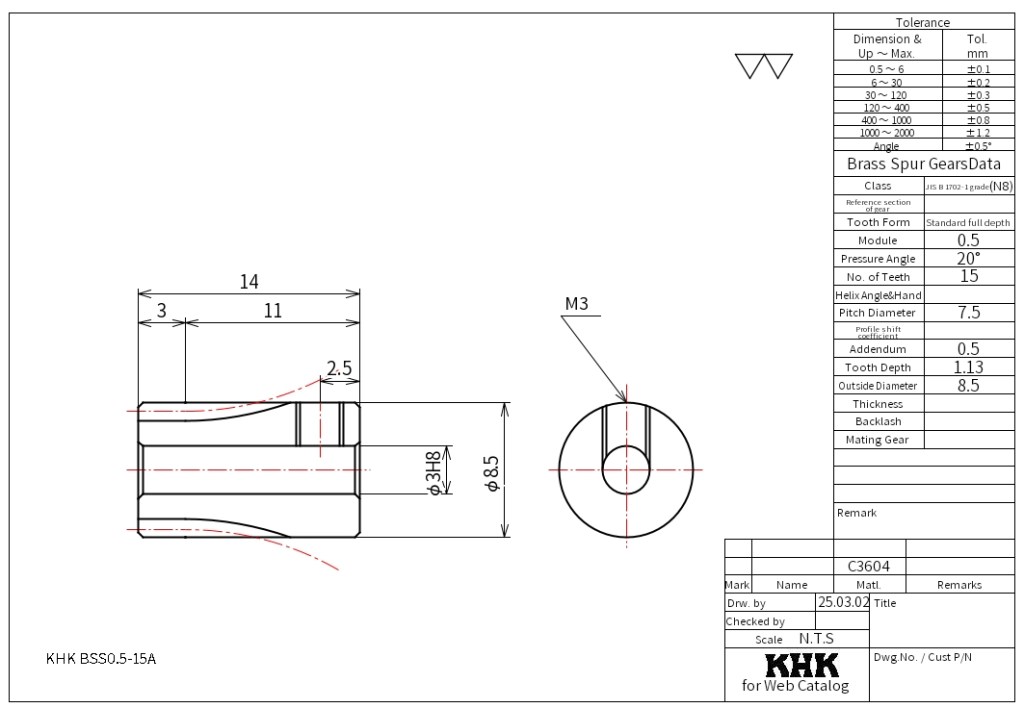
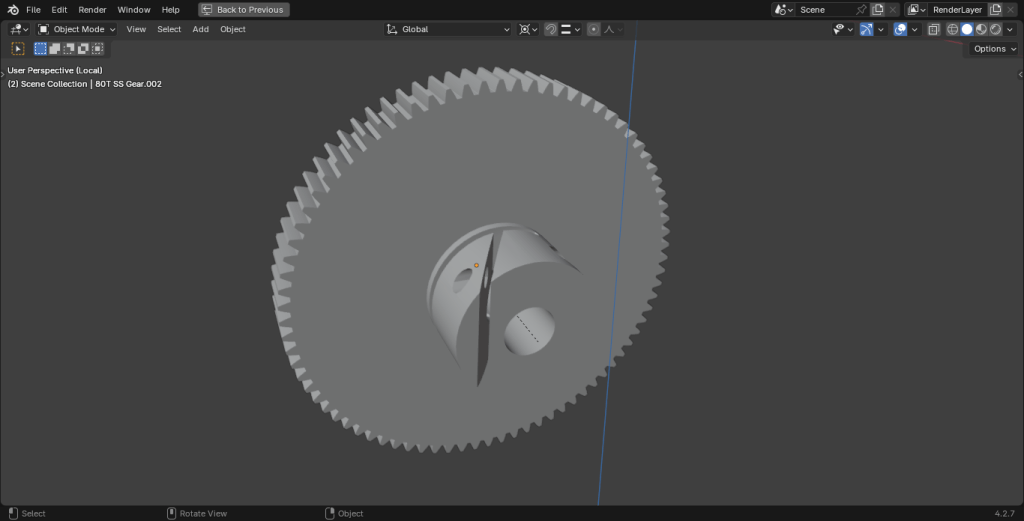
I model the gears using the Involute Spur Gear Builder v2.0, and the dimensions given by KHK Gears.
Here are the gears:


Once the parts are drawn, it’s time to put them together.

This is as compact as I could make the gear train. The mechanical advantage is 4:1. I use spacers and collars to keep the gears where they need to be. I had a dream that I used the largest spur gear available at KHK Gears to make room for a 15T plastic gear beneath the motor. I want to try with four gears just to see if I can make them compact enough. I will try.
Here is my result:
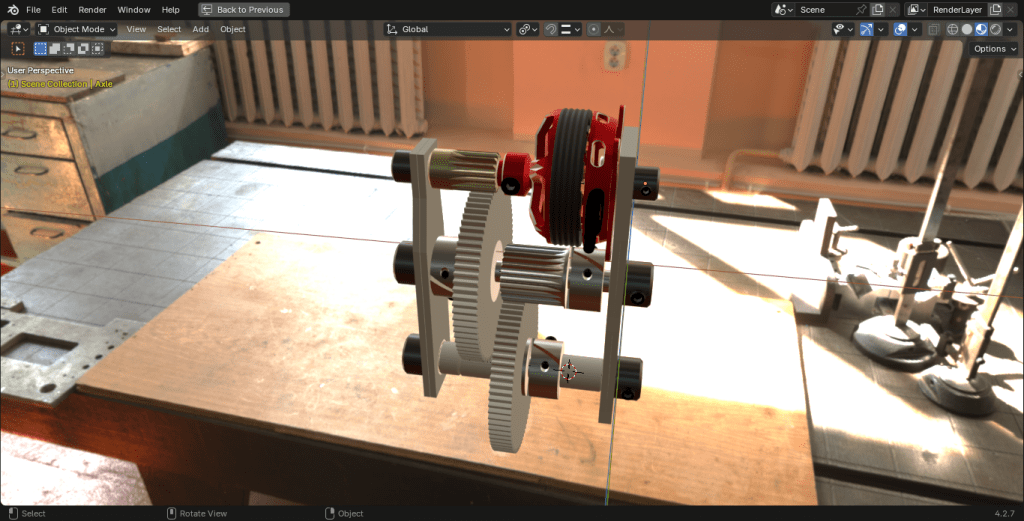
The mechanical advantage is [(80T/24T)*(80T/15T)=17.78] or 17.78:1. List of parts is:
1x BSS0.5-15A
2x DSF0.5-80
1x SUSF0.5-24
1x 3mm shaft
2x 5mm shaft
1x C2822-V2 brushless motor
4x 5mm collar
2x 3mm collar
Misc screws
To make the frame for the gearbox, I literally make a box and subtract some shapes. E-flute cardboard is about 1.5 mm thick and is a good weight for building model airplanes. Using cardboard instead of cardstock or paperboard will make it more time efficient to build stronger structures. Like, I could use cardboard for the wing spars and the fuselage.
But first it’s time to add some eccentric cranks to this assembly. Should I attach the crank to the shaft collars or to the axle directly? The slotted arms need a space to pivot besides the shaft collars above. If I attach a crank to the shaft collar then I can remove the crank and collar if needed by loosening the set screw.
 Singed Pinions